



A piggy bank is a container used to save money, usually coins and sometimes bills. Traditional piggy banks are shaped like pigs, but you can also use jars, boxes, or other containers to store your savings.
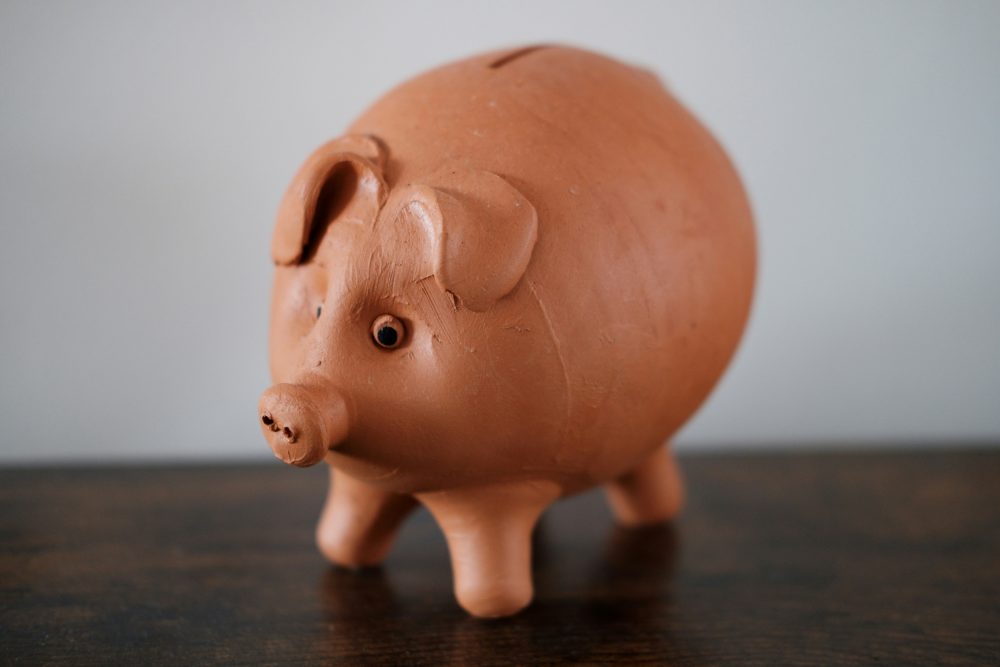
A DIY piggy bank is a homemade version that you can create and decorate using everyday materials, such as plastic bottles, cardboard boxes, or jars. Making one with kids is a fun, hands-on way to introduce the concept of saving money.
With a few simple supplies, you can create a DIY piggy bank that kids will enjoy decorating and using to collect their coins. These easy projects are perfect for a creative afternoon at home and offer a natural opportunity to talk about money.
Below, you’ll find five easy DIY piggy bank ideas, essential safety tips, and practical ways to teach kids about saving at every age, from counting coins with preschoolers to helping teenagers save for a bigger goal.
Before you start: a quick safety note
Kids can paint, glue and decorate, but an adult should always cut the coin slot. Use a craft knife on a cutting mat, and smooth any sharp plastic or metal edges with sandpaper or cover them with tape. A slot about 1¼ inches long fits quarters, and a slot about 2½ inches long lets kids fold and save bills too.
5 easy DIY piggy banks to make with kids
1. Save, Spend and Share jars
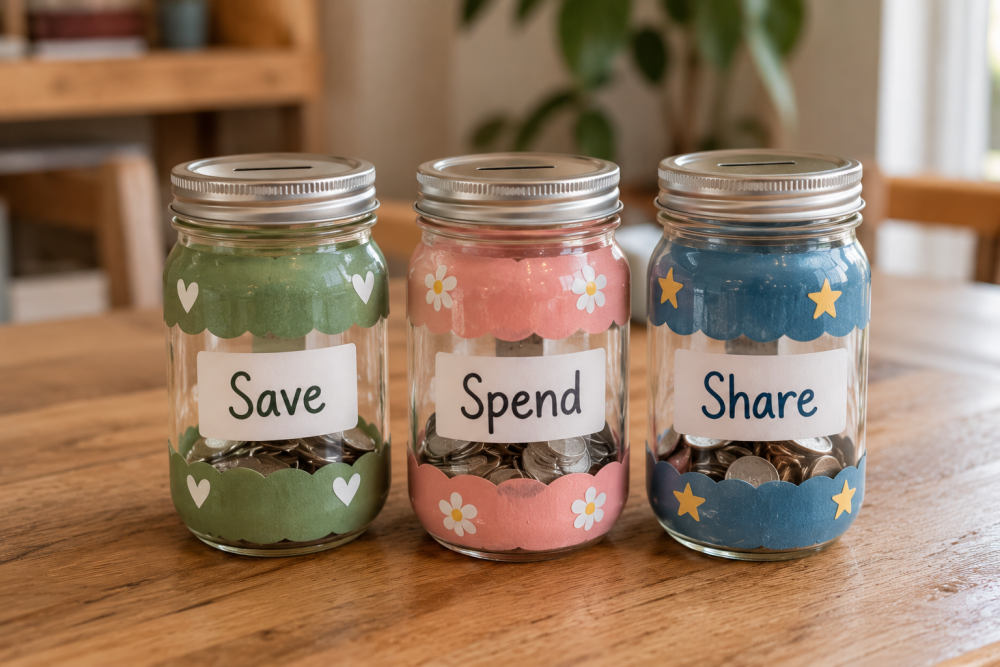
This is the best bank for teaching, because it shows kids that money has different jobs.
You will need: three clean mason jars with lids, acrylic paint or paint pens, labels or letter stickers.
- Clean the jars and remove any old labels.
- Paint or decorate the outside, but leave a clear strip so kids can watch the coins pile up.
- Label the jars Save, Spend and Share.
- An adult cuts a coin slot in each lid.
2. Plastic bottle pig
A soda or juice bottle with a screw cap already has a snout. Rinse it well and let it dry. Glue on paper ears, button eyes and a curly pipe cleaner tail, then paint it pink or leave part of it clear so the savings show. Cut the coin slot on the top of the bottle’s side, and unscrew the cap when it is time to count.
3. Monster bank from a can or snack tube
Coffee cans, formula cans and potato chip tubes all make sturdy banks with a lid that comes off. Wrap the can in scrapbook paper or paint it, then add googly eyes, paper teeth and arms. Kids love giving their monster a name. Cut the slot in the plastic lid, where it is easy and safe to cut.
4. See-through box bank
A clear-front box lets kids watch their savings grow, which keeps them motivated. Line a small cardboard box (a pastry or gift box with a window works well) with decorative paper, cut a slot in the top, and write the savings goal on the front.
5. Travel bank from a plastic bottle
Saving for a family trip? Turn a plastic bottle into an airplane. Tape on wings and a tail cut from card stock, draw windows along the side, and cut a slot on top. Every coin that goes in is “fuel” for the trip.
How to teach kids to save with a piggy bank

The bank is only the first step. What really teaches saving is the routine around it. The Consumer Financial Protection Bureau’s Money as You Grow guide sums up the lesson for young children: “You may have to wait and save up money before you can buy something you want.”
These steps work for most families:
- Pick one goal. Let your child choose something they really want, and write it on the bank with the price.
- Make the goal visible. Tape a picture of it to the bank, or draw a simple chart and color it in as the savings grow.
- Give them money to save. A small weekly allowance, birthday money or pay for extra chores all work.
- Count together every week. It turns saving into a habit, and counting coins is great math practice.
- Celebrate the goal. When they reach it, let them buy the thing themselves. That moment is what makes the lesson stick.
Saving ideas by age
Ages 3 to 5: Keep it simple and hands-on. Let them drop the coins in themselves, count them once a week, and pick a small goal they can reach in a week or two, like a sticker book. A see-through bank helps them see progress.
Ages 6 to 12: Use the Save, Spend and Share jars and set a goal that takes a few weeks or months. Try matching part of what they save, such as 25 cents for every dollar, to show how savings can grow. The CFPB suggests helping kids at this age “start a habit of putting money aside for things you want.”
Ages 13 and up: When the piggy bank fills up regularly, open a savings account together and talk about interest. Keep the bank for spare change and small goals, and use the account for bigger ones like a bike, a phone or a trip.
When you want a bank that lasts
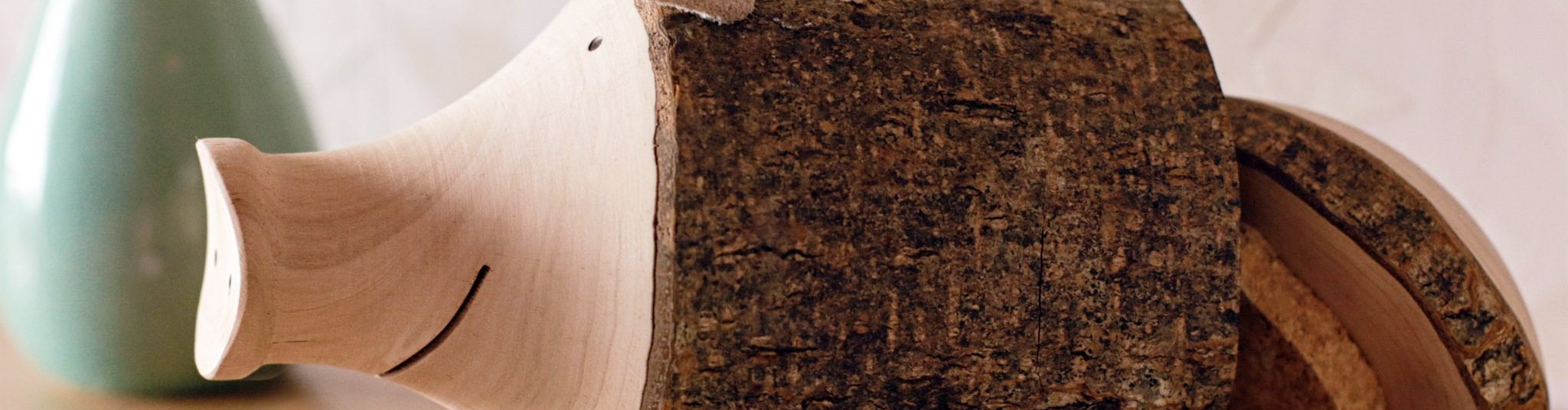
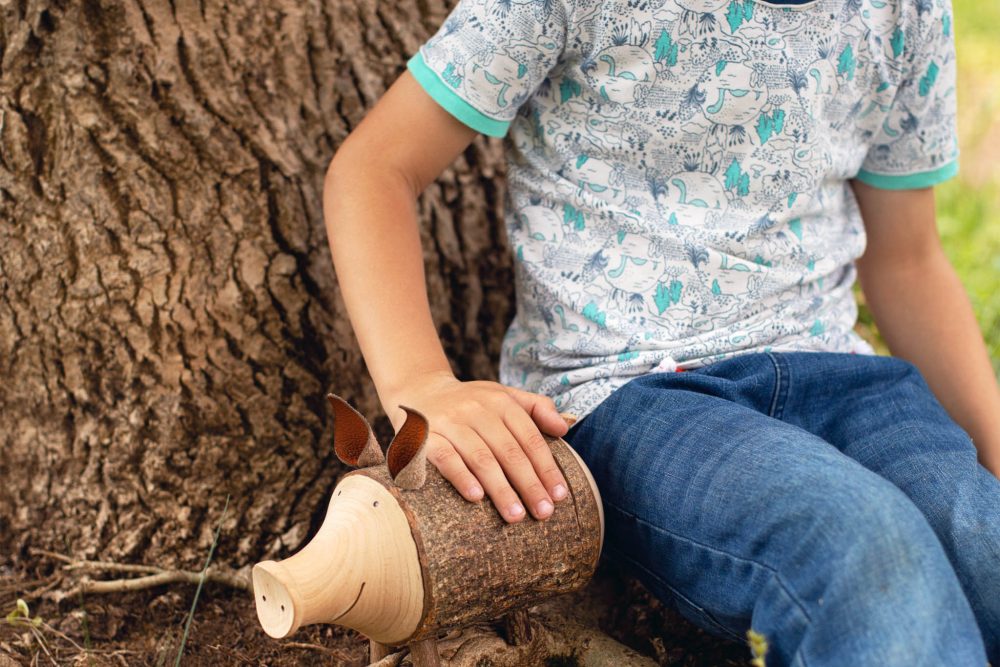
DIY banks are perfect for learning, but a cardboard or plastic bank rarely lasts into the teen years. If you want one that does, our personalized wooden piggy bank is handcrafted from real forest wood with the bark left on, with leather ears and a tail. The child’s name is laser-engraved on the back, and the back panel comes off easily when it is time to count the savings, so there is no need to break it.
For more small wooden keepsakes, browse our wooden gifts and figurines.
Frequently Asked Questions About Piggy Bank
What can I use to make a DIY piggy bank?
Mason jars, plastic bottles, coffee cans, snack tubes and small cardboard boxes all work. Choose something with a lid or cap that comes off, so you can take the money out without breaking it.
How do you cut a coin slot safely?
An adult should cut it with a craft knife on a cutting mat. Make it about 1¼ inches long for coins, and smooth or tape any sharp edges.
What age can kids start saving with a piggy bank?
Around ages 3 to 5, when they can drop coins in themselves and understand that saving now means getting something later.
How do you teach a child to save money?
Pick one goal, make it visible, give them a regular amount to save, count together every week and celebrate when they reach the goal.
What is the Save, Spend and Share method?
Kids split their money into three jars: one to save for a goal, one to spend now, and one to give to others or a cause they care about.