






It’s one of the oldest kitchen debates: wood vs. plastic cutting boards. Ask ten home cooks and you’ll get ten confident answers. “Plastic is more hygienic!” “Wood is better for your knives!” “Glass is easiest to clean!”
So who’s right?
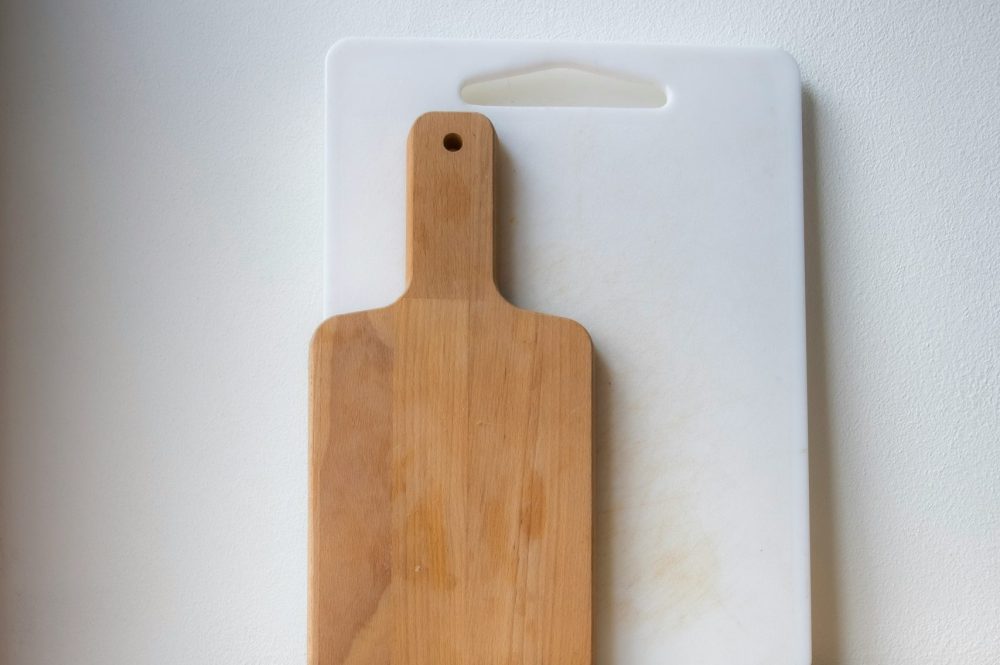
The honest answer is that each material has strengths, and the best cutting board material depends on how you cook. In this guide, we’ll walk through what the research actually says about bacteria, how each surface treats your knives, how long boards last and what they need from you. We make wooden boards for a living, so we’re a little biased, but we’ll also tell you when a plastic board is the smarter tool.
Wood, plastic, glass and bamboo at a glance
| Material | Hygiene | Kind to knives? | Care | Best for |
| Wood | Good: in lab tests, bacteria didn’t multiply on wood | Yes, the surface has a little give | Hand wash, dry upright, oil monthly | Everyday prep, carving and serving |
| Plastic | Good when new; harder to clean once covered in knife scars | Mostly | Dishwasher safe | Raw meat and quick jobs |
| Glass | Nonporous and easy to wipe clean | No, it dulls edges fast | Dishwasher safe | Serving cheese or as a trivet, not cutting |
| Bamboo | Good, with a dense surface | Yes, far gentler than glass | Hand wash, oil occasionally | Eco-minded kitchens and lightweight boards |
Now let’s dig into the details.
5 key differences between wood and plastic cutting boards
1. Hygiene: are wood cutting boards sanitary?
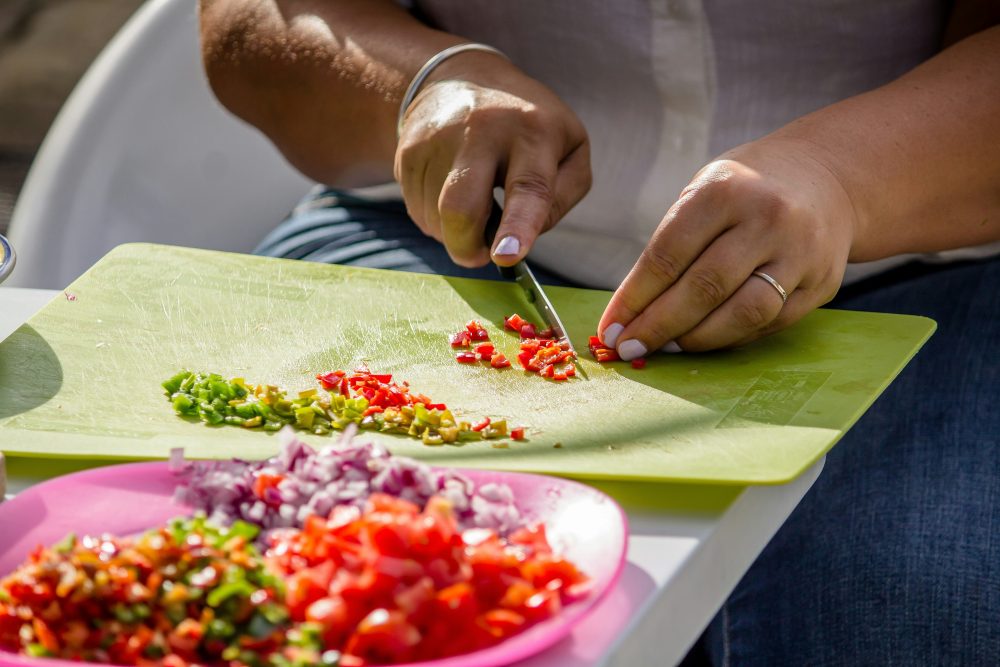
This is the big one, and the answer surprises a lot of people. For years, plastic was assumed to be cleaner because it isn’t porous. But research by food microbiologist Dean Cliver at UC Davis found something different. Bacteria didn’t survive well on the surface of wooden boards, and the ones that soaked into the wood didn’t multiply and gradually died. On plastic, new boards were easy to clean, but once a board was covered in knife scars, it became very hard to clean and disinfect by hand.
Cliver also pointed to a 1992 study of salmonella cases in Northern California homes. People who used wooden boards were less than half as likely to get sick than average, while people using plastic or glass boards were about twice as likely. One caveat: that’s older research on home kitchens, not a final verdict.
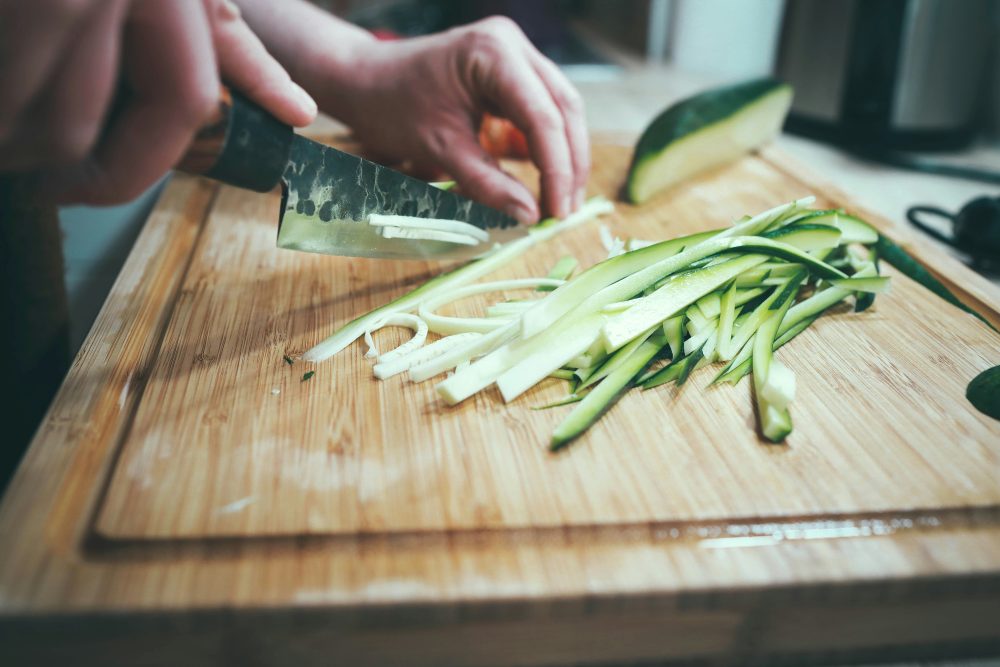
So what’s the official word? The USDA Food Safety and Inspection Service says you can choose either wood or a nonporous board like plastic, as long as you clean it well. The rule that matters most applies to every material: use one board for raw meat, poultry and seafood, and a separate one for produce and bread.
2. Knives: which is the best cutting board for knives?
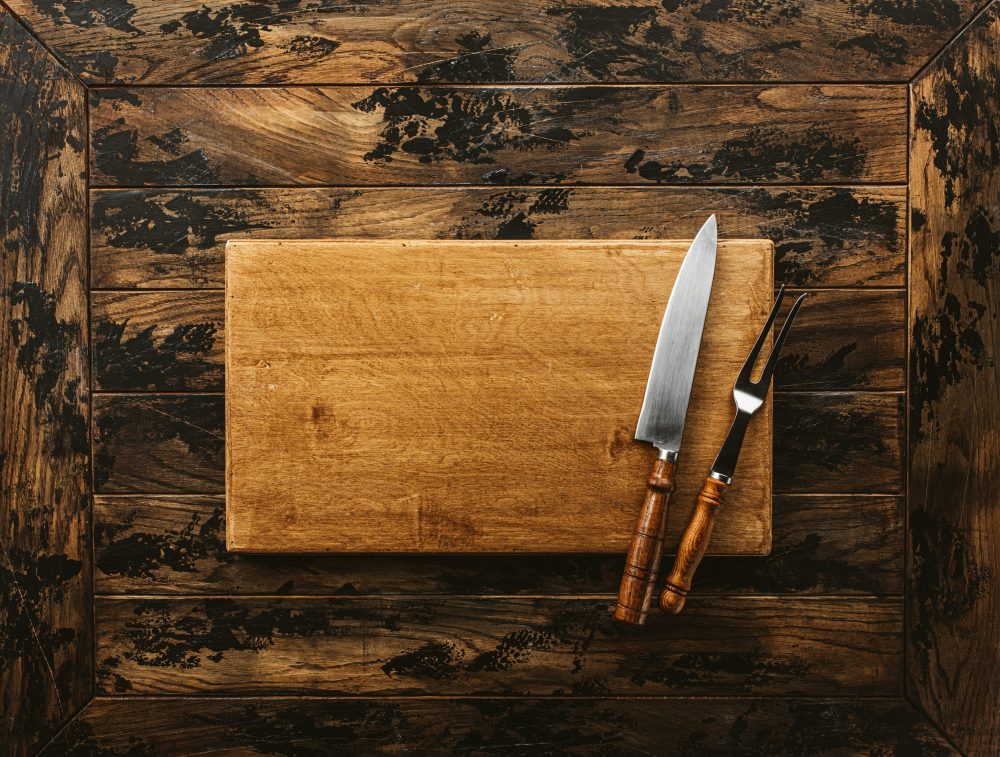
Your knife edge is a very thin strip of metal, and every cut presses it into the board. Wood has a little give, so the edge sinks in slightly instead of slamming into a hard surface. Plastic is also gentle when new.
A glass cutting board is the clear loser here. America’s Test Kitchen actually uses glass boards to dull new chef’s knives on purpose for its testing. The same goes for marble and slate. They look beautiful, but save them for serving.
3. Durability: how long does each board last?
Plastic boards don’t last forever. Every cut leaves a groove, and the USDA recommends replacing boards once they’re worn or have grooves that are hard to clean. For a plastic board used daily, that can happen surprisingly fast.
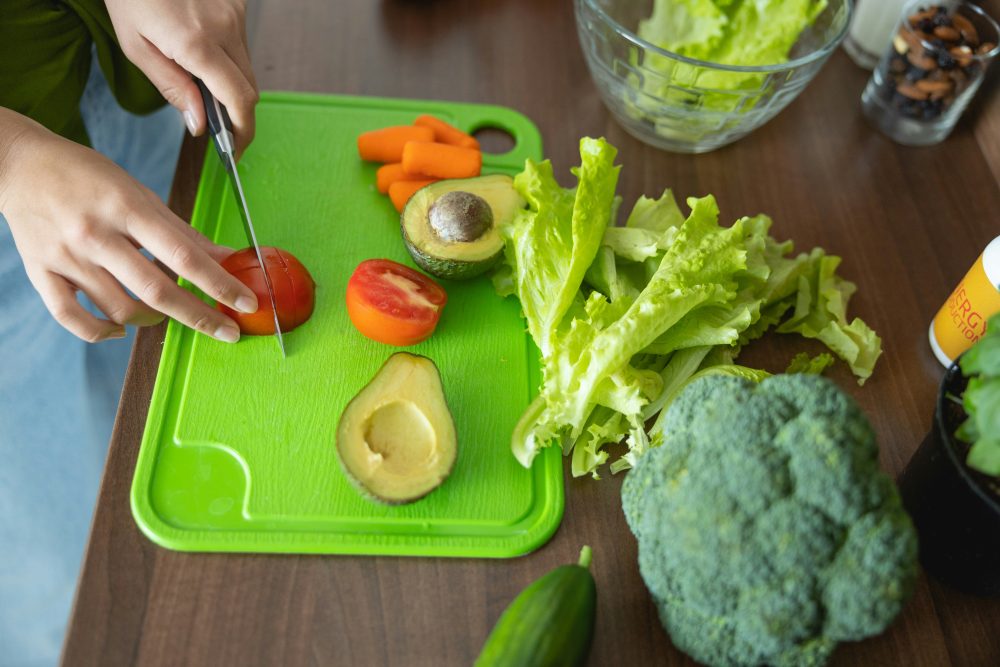
A good hardwood board, on the other hand, can last for many years. When the surface gets rough, it can be sanded smooth and re-oiled, almost like new. Dense woods hold up especially well. Olive wood, for example, has a tight, heavy grain, which is why our 16-inch olive wood board is built to be an everyday workhorse and not just a pretty face.
4. Care: what each board needs from you
Plastic wins on convenience: toss it in the dishwasher and you’re done. Wood asks for a few minutes of care:
- Wash it by hand with hot, soapy water after each use.
- Dry it standing up so air reaches both sides.
- Rub in a food-safe oil about once a month, or whenever the wood looks dry.
- Never leave it soaking in the sink.
The USDA says solid wood boards can go through the dishwasher, but most woodworkers, us included, recommend hand washing. Long soaks and high heat dry out the wood and can lead to cracks or warping. To sanitize any board, the USDA suggests 1 tablespoon of unscented liquid chlorine bleach per gallon of water. Flood the surface, let it stand for a few minutes, then rinse and dry.
5. Looks, serving and peace of mind
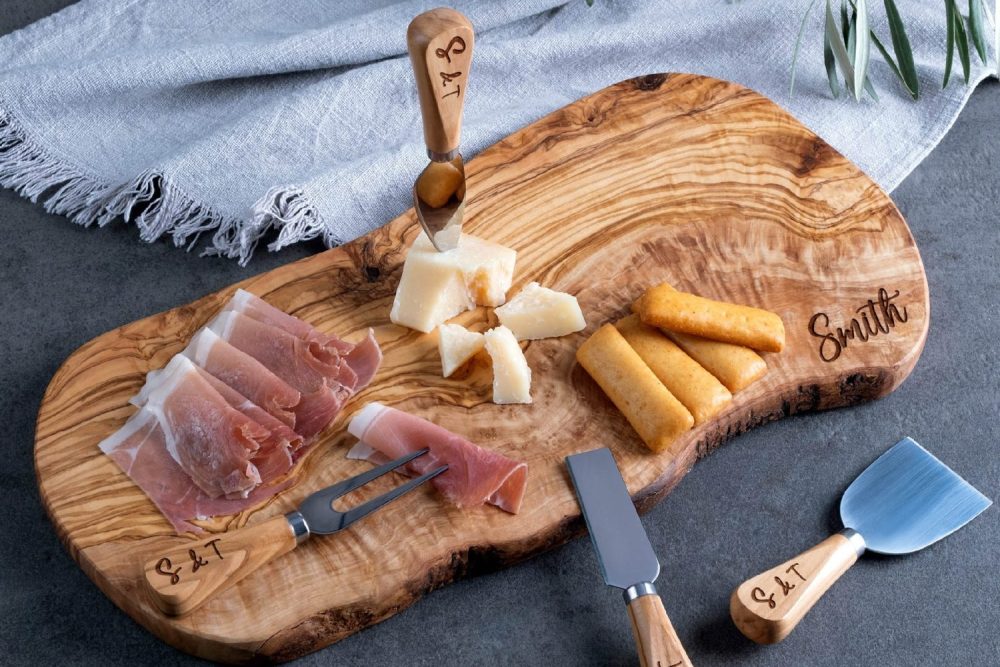
Here’s where wood really pulls ahead. A wooden board goes straight from prep to the table. Slice the bread, arrange the cheese, carve the roast and serve it right there. A live edge board, which keeps the natural edge of the tree, turns even a simple snack into something that looks special.
There’s also a newer reason some cooks are switching. A 2023 study in Environmental Science & Technology found that chopping on plastic boards releases tiny plastic particles into food. The particles weren’t toxic to cells in the lab, and scientists don’t yet know much about long-term effects, but if you’d rather keep plastic off your plate, wood is an easy swap.
When a plastic board still makes sense
We love wood, but we’d be doing you a disservice if we said plastic has no place in the kitchen. It does, and many experienced cooks keep both.
- Raw meat, poultry and seafood. A plastic board that goes straight into a hot dishwasher is an easy way to handle raw proteins. Some cooks use color-coded plastic boards so raw meat never touches anything else.
- Quick, messy jobs. Cutting raw chicken for a stir-fry on a Tuesday night? Plastic is fine.
- Shared or busy kitchens. If not everyone in the house will hand wash and dry a wood board, a dishwasher-safe board avoids arguments.
A simple setup that works for most homes: a plastic board for raw meat, and a wooden board for everything else, including slicing cooked meat and serving. For carving roasts and briskets, a large board with a juice groove, like Forersr Decor’s 20-inch board with a juice groove, keeps the drippings off the counter.
How to choose and care for a wooden cutting board
Decided to go with wood? Here’s what to look for so your board lasts for years.
- Pick a dense hardwood. The best wood for cutting boards is hard enough to resist deep cuts but not so hard that it dulls your knife. Maple, walnut, cherry and olive wood are all classic choices, and they’re the woods we use for our wooden cutting boards.
- Get the right size. A 12- to 16-inch board covers most daily chopping. If you carve roasts or slice brisket, go for 18 to 20 inches with a juice groove. Our guide to BBQ gifts for grill lovers explains how to size a board for big cuts.
- Oil it regularly. A dry board is more likely to crack. A thin coat of food-safe oil once a month keeps the wood healthy. Not sure which one to use? Here’s our guide to the best oils for a wooden cutting board.
- Go wood all the way. If you love how a wooden board treats your knives, you’ll love how wooden utensils treat your pans. They won’t scratch nonstick coatings, and they don’t get hot in the pot the way metal spoons do.
Quick answers about Wood vs Plastic Cutting Boards
Are wooden cutting boards sanitary?
Which is better for raw meat, wood or plastic?
Can wooden cutting boards go in the dishwasher?
Is a bamboo cutting board a good choice?