



5% OFF
5% OFF
5% OFF
5% OFF
WHY CHERRY
The only board that improves its own looks
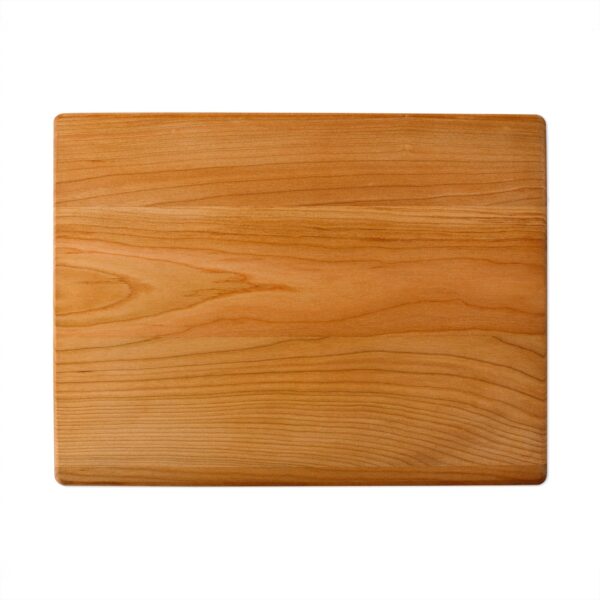
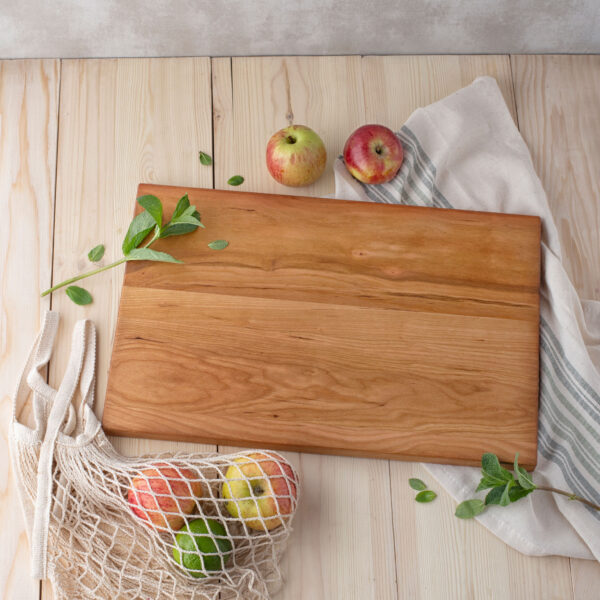
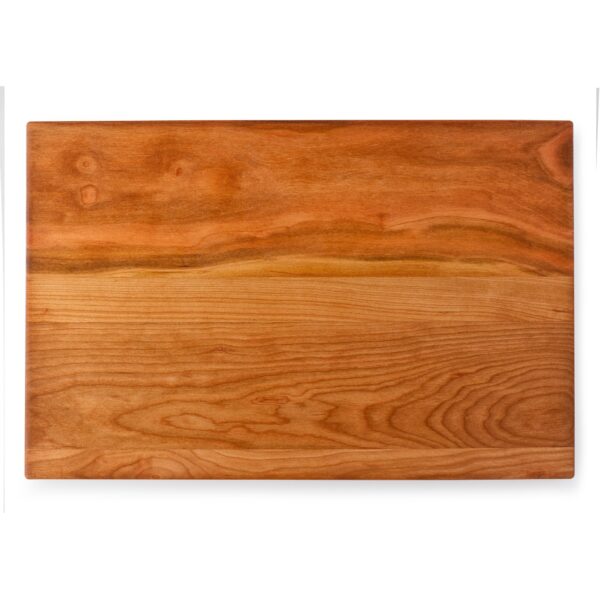
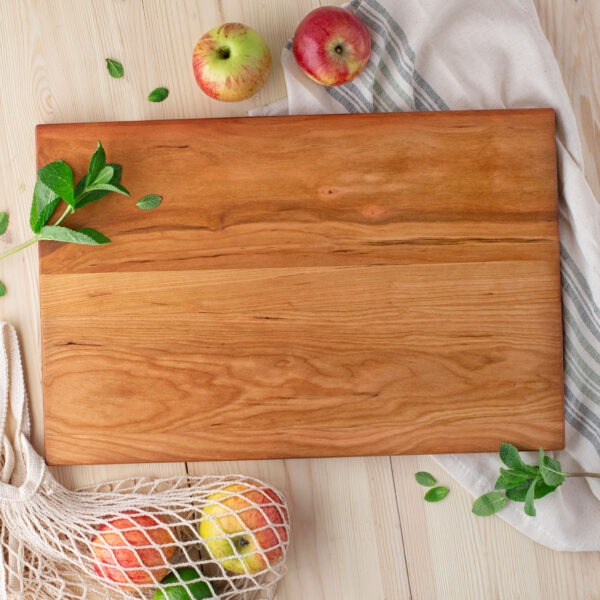
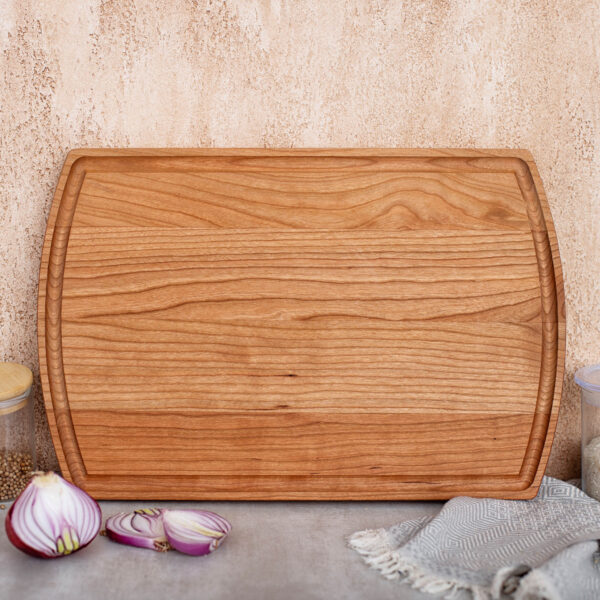
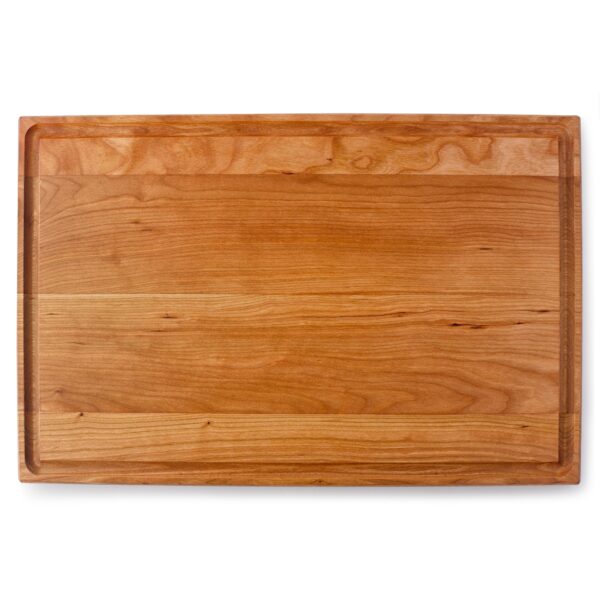
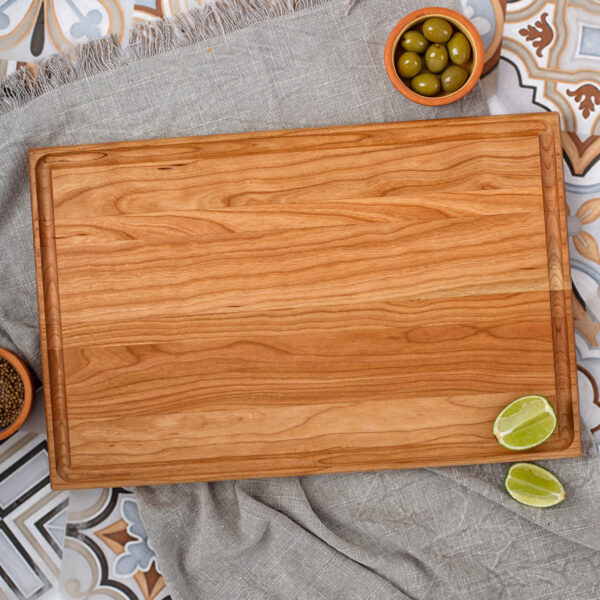
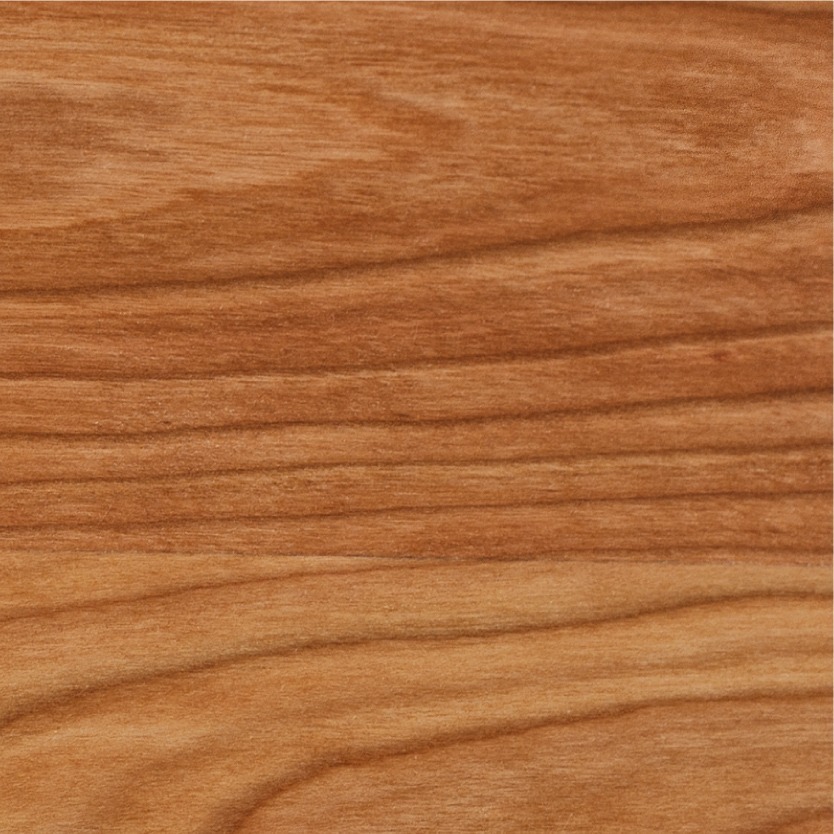
Cherry does something no other board wood does: it ripens. New, it's a warm honey-rose; give it a year of light and use and it settles into the deep amber that antique cherry furniture is prized for — your board at five years is genuinely more beautiful than the day it arrived. Underneath the color story it's a proper working hardwood: smooth, fine, closed grain, kind to knife edges, easy to clean. Ours are American-made from US and Canadian cherry, panel-joined, and finished only in food-safe mineral oil, from the 12×9 up to the inch-thick 17×11 with juice groove. Middle-toned between pale maple and dark walnut, cherry suits kitchens that want warmth without heaviness — and its face takes detailed engraving nearly as crisply as maple, over in the personalized collection.
QUESTIONS
Cherry cutting boards, answered
Is cherry wood good for cutting boards?
Very — cherry is one of the classic American board hardwoods alongside maple and walnut. Its grain is fine and closed (moisture-resistant, hygienic), its hardness sits in the knife-friendly range, and it machines to an exceptionally smooth working face. It's chosen less often only because fewer people know it — the ones who do tend to stay loyal.
Why is my cherry board changing color?
Because it's cherry, and it's supposed to. Cherry darkens with exposure to light and air — from fresh honey-rose toward rich amber-red over the first year or two. It's the same patina that makes old cherry furniture valuable, happening on your counter. Nothing is wrong, nothing is staining; the board is just becoming a better version of itself.
Cherry vs. maple vs. walnut — where does cherry fit?
Squarely, and pleasingly, in the middle. Warmer-toned than maple, lighter than walnut; slightly softer than maple (easier on edges), a touch firmer than walnut. If maple feels clinical and walnut feels formal, cherry is the warm one — the board that matches wooden kitchens, butcher-block counters, and anyone who liked their grandmother's furniture.
How do I keep a cherry board looking its best?
Same easy routine as all our boards — hand wash, dry upright, monthly mineral oil — with one cherry-specific note: oiling deepens and evens the developing color, so a well-oiled cherry board ages into its amber gracefully rather than patchily. Yours ships pre-oiled, so the aging starts right.
What sizes do cherry boards come in?
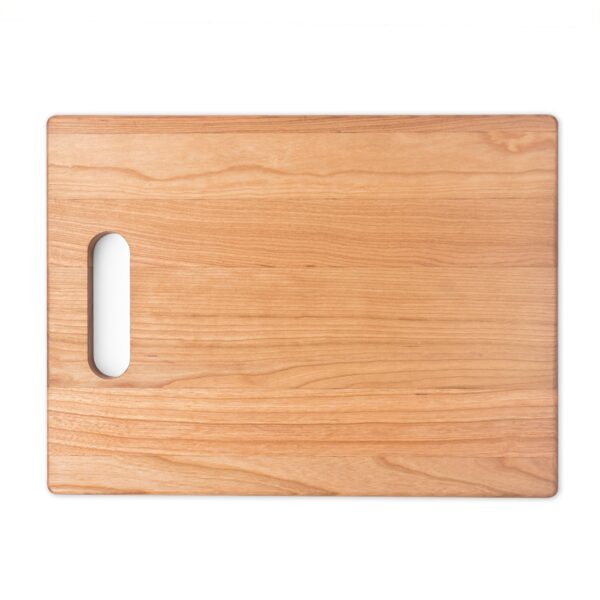
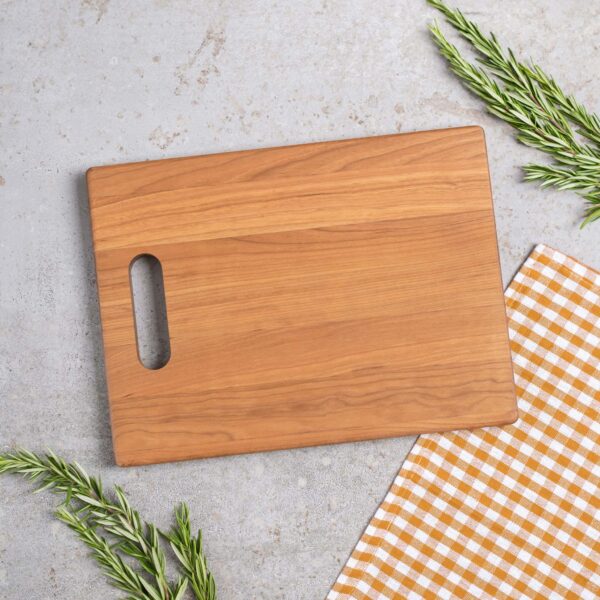
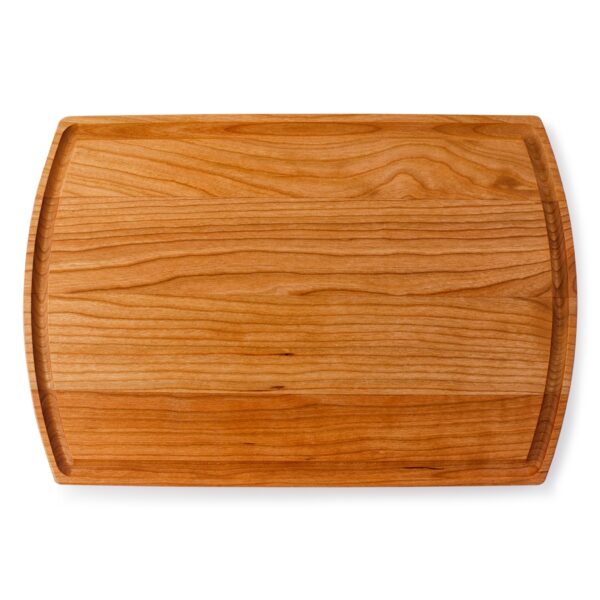
The full lineup: 12×9 daily board, 16×10 workhorse, handled 12×9 paddle for serving, the 16×10 arched board with juice groove, and the inch-thick 17×11 juice-groove board for carving and holidays.
Want a name on it?
Cherry's smooth, warm face takes fine engraving beautifully — recipes, names, detailed designs that deepen along with the wood. Personalized to order with a free preview.