


Wooden cutting boards can do more than prepare food. With their natural grain, rich colors, and distinctive edges, they can bring warmth and character to your kitchen when displayed thoughtfully.
The easiest way to display cutting boards is to lean them against your backsplash, layering larger boards behind smaller ones. You can also hang them on a wall or rail, arrange them in a countertop rack, or place a favorite board on an open shelf. The best setup depends on your kitchen space, the size of your boards, and how often you use them.
In this guide, you’ll discover seven easy ways to display cutting boards in your kitchen, how to choose the right spot for each size, and how to care for wooden boards so they stay beautiful and ready to use.
1. Lean and layer them on the counter
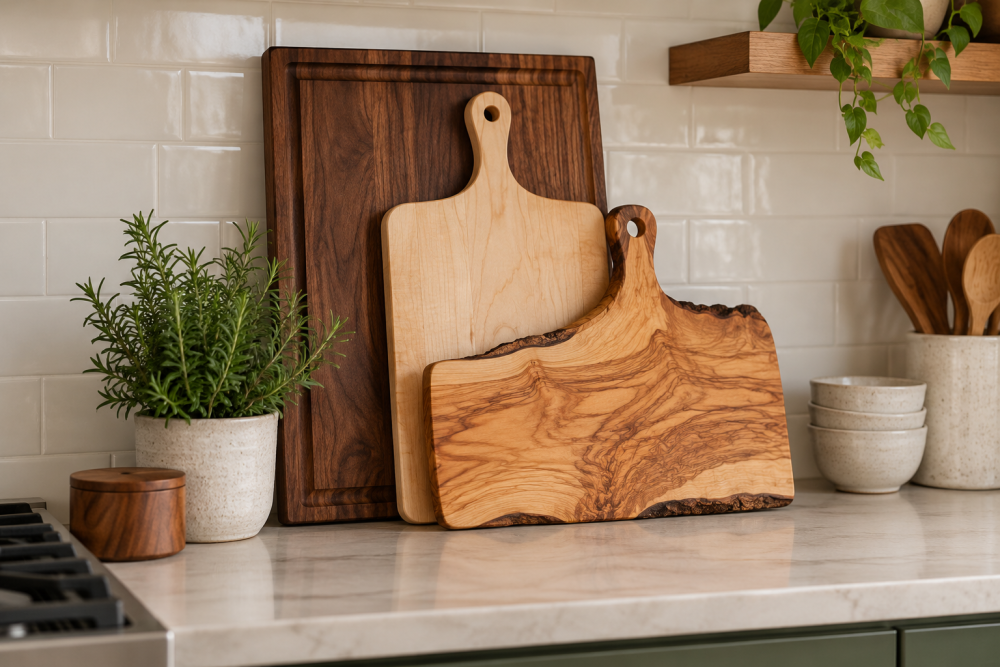
This is the simplest display and works in almost any kitchen.
- Put the largest board at the back, against the backsplash.
- Layer one or two smaller boards in front, slightly off-center so each one shows.
- Mix shapes: a rectangle at the back, a board with a handle or a live edge board in front.
- Mix tones: a dark walnut board behind a light maple one makes both stand out.
Three boards is usually the sweet spot. More than that starts to look cluttered.
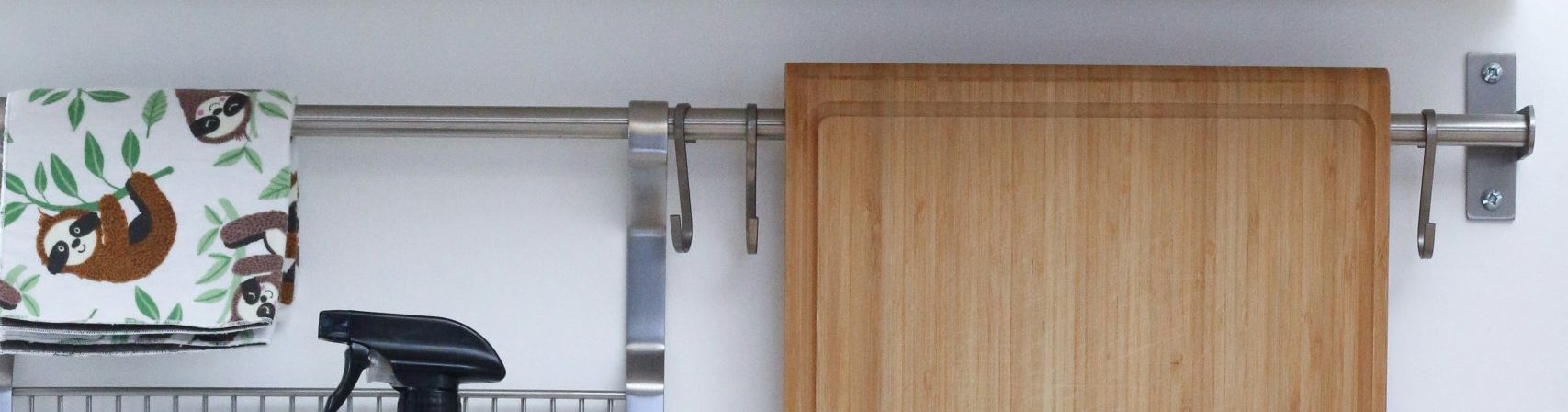
2. Hang boards with handles
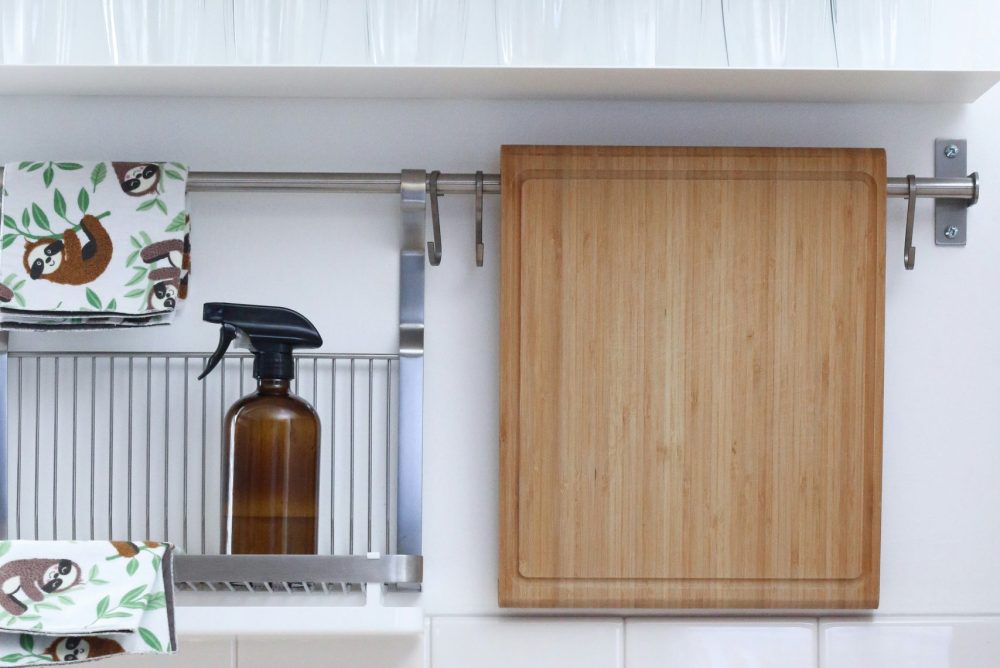
Boards with a handle are made for hanging. A wall rail with S-hooks, a row of simple peg hooks, or a single hook on the side of a cabinet all work. If a board has no hole, a leather strap looped around the handle is an easy fix.
Hanging keeps the counter clear and lets air reach both sides of the board, which helps it dry.
3. Stand them in a rack or bin
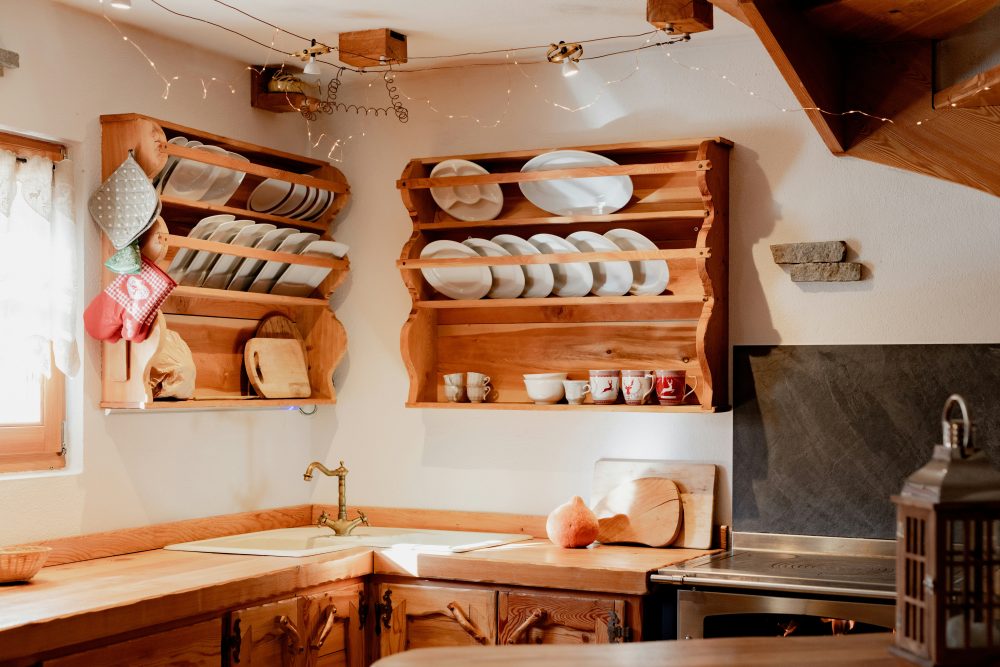
If you have several boards and use them often, a simple upright rack or a deep basket next to the counter keeps them organized and easy to grab. Store boards on their edge rather than flat, so they dry evenly and do not trap moisture underneath.
4. Use the space beside the stove or sink
Small kitchens have their own trick: the narrow gap between the stove and the wall, or the end of the counter next to the sink, often fits a board or two standing on edge. It keeps them close to where you prep, without taking up workspace.
Keep wood a little away from direct heat and from the sink splash zone, since heat and standing water can make wood dry out or warp.
5. Make one board the centerpiece
A single large board on a kitchen island can work like a tray. Set it flat and add a bowl of fruit, a small plant or a candle. Live edge boards are perfect for this, because the natural shape and bark edge already look like decor. When guests come over, it turns straight into a serving board.
6. Add a small stand to the open shelf
Open shelves are a natural spot for boards you use less often, such as a serving board or a personalized board. Stand the board upright at the back of the shelf with a small plate stand, and set jars or cookbooks in front.
7. Show off an engraved board
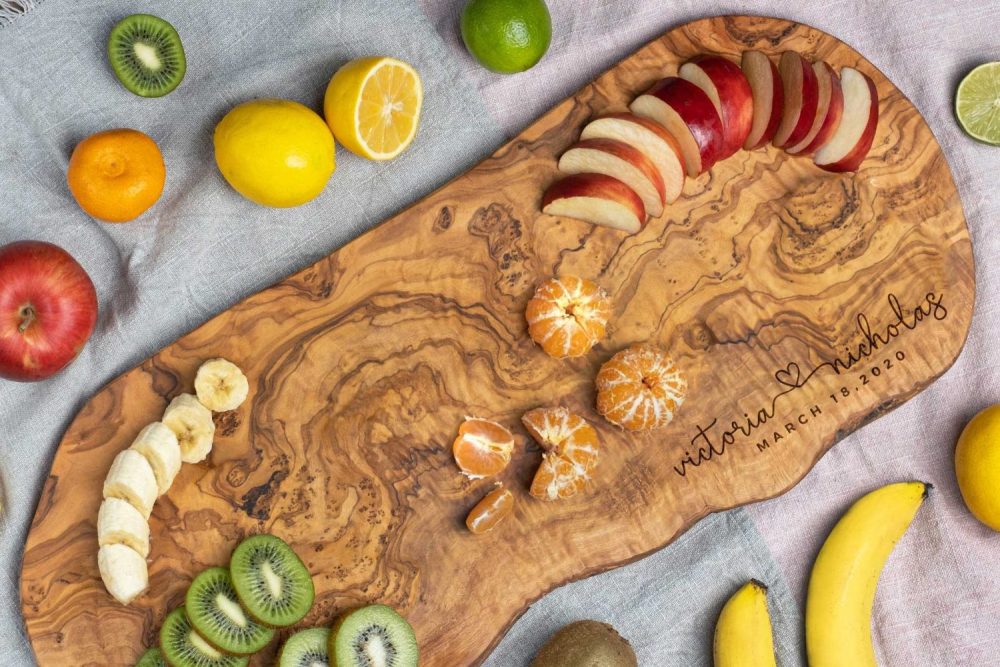
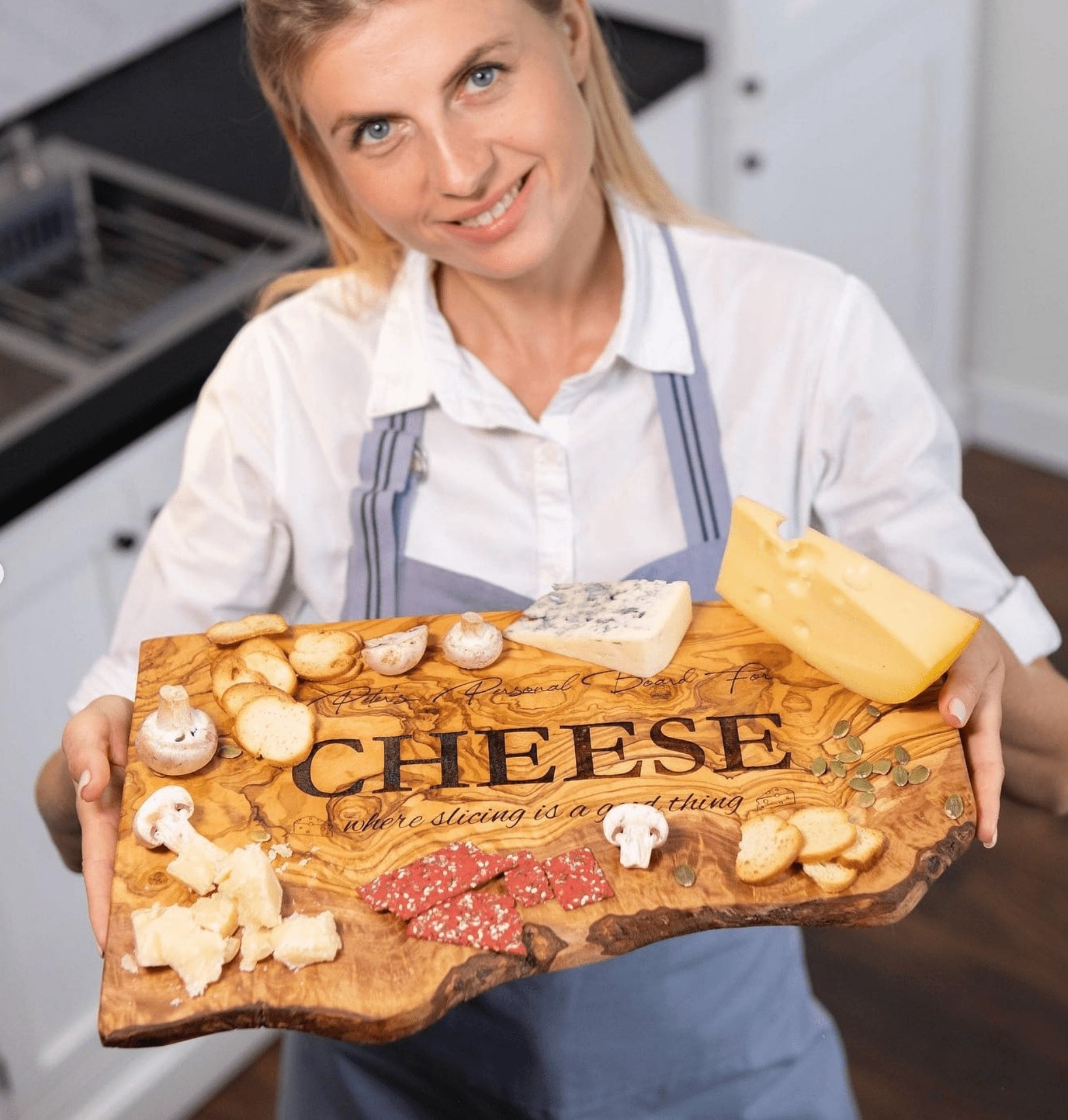
An engraved board, with a family name or a handwritten recipe, deserves a front-row spot. Lean it at eye level on the counter or a shelf, and use the plain side for cutting so the engraving stays sharp.
Which board sizes work where
| Size | Where it works best |
| Small, about 12 x 9 inches | Front layer of a counter display, hanging by the handle, open shelves |
| Medium, about 16 x 10 inches | Middle layer, beside the stove, everyday prep board |
| Large, about 17 x 11 inches and up | Back layer against the backsplash, island centerpiece |
| Live edge or oversized boards | Statement piece on an island or a wide counter |
Our wooden cutting boards come in these sizes in maple, cherry, walnut and olive wood, with and without handles or juice grooves. For a centerpiece, see our live edge cutting boards, each cut from a single piece of olive trunk with the bark edge kept on.
Keep displayed boards looking good
Boards on display still need a little care:
- Dry them fully before putting them back. A board leaned against the wall while wet can trap moisture behind it.
- Keep them out of strong direct sun. Long hours of sun can fade or dry the wood.
- Oil them when they look pale. A little food-grade mineral oil brings back the color, and an oiled board looks better on display.
- Rotate them. If you always cook on the same board, swap it with one from the display now and then.
For the full routine, see our guide to oiling and caring for a wood cutting board.
Quick answers about Displaying Cutting Boards