



Caring for your wood
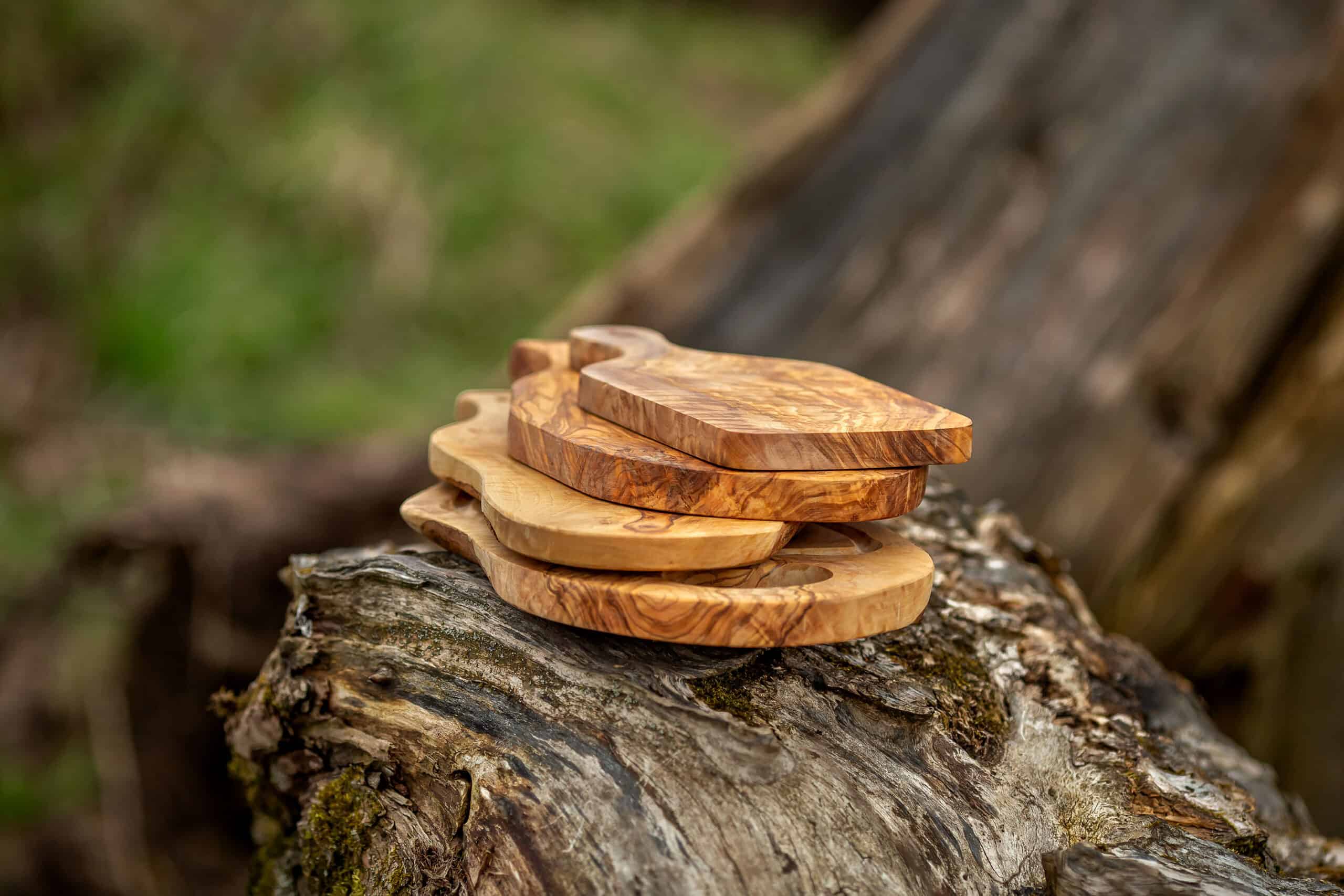
A few simple habits keep an olive or walnut board beautiful for decades – and the engraving
stays crisp the whole time. Here’s everything you need to know.
ON THIS PAGE
Everyday care
Your board arrives pre-finished with food-safe mineral oil and is ready to use. After each use:
- Hand wash with warm water and a little mild dish soap
- Rinse and wipe dry with a towel – don’t let it air-dry flat.
- Stand it upright (or on its edge) so both faces dry evenly.
The one rule that matters most: never soak the board or leave it sitting in water. Wood expands when it absorbs water and shrinks as it dries, and prolonged soaking is the main cause of warping and cracking.
Re-oiling & conditioning
Wood naturally loses oil over time and through washing. When the surface starts to look dry or pale, it’s time to re-oil — usually every 3–4 weeks with regular use, less often for display pieces.
- Make sure the board is clean and fully dry.
- Apply a generous coat of food-safe mineral oil with a soft cloth, working it into the grain.
- Let it soak in for a few hours (or overnight), then wipe off any excess.
- For extra protection, finish with a board conditioner (mineral oil + beeswax), which adds a water-resistant layer.
Use only food-safe mineral oil or a dedicated board conditioner. Cooking oils like olive or vegetable oil go rancid and should never be used.
By wood type
The basics are the same for every board, but each wood has a few quirks worth knowing.
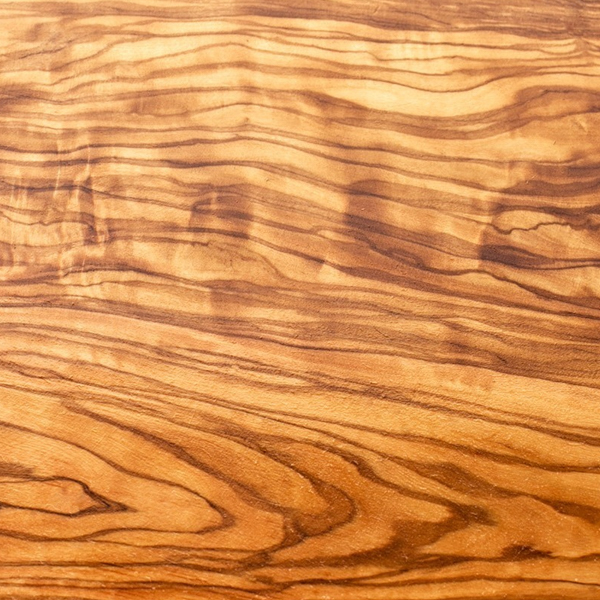
Olive wood
Dense and naturally water-resistant with striking grain. Re-oil a little more often to keep the figure rich. Each piece is unique.
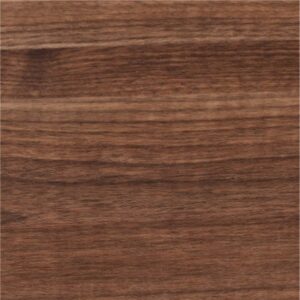
Black walnut
Hard and forgiving, with deep color. Holds up well to heavy use; re-oil to keep the dark tone from looking dull.
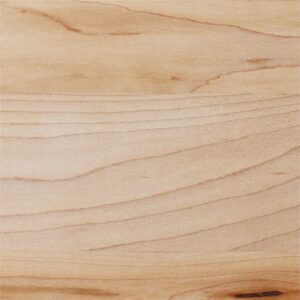
Maple & Cherry Light and tight-grained — the highest engraving contrast. Wipe spills promptly since lighter wood shows staining more.
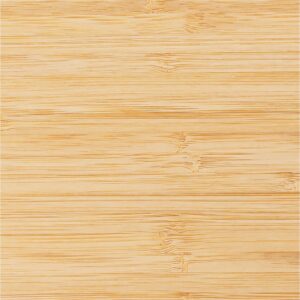
Bamboo
Eco-friendly and very stable. Still benefits from occasional oiling, though it needs it less often than hardwoods.
Knives, cheese tools & utensils
Olive wood handles, spoons, spatulas, and cheese tools follow the same hand-wash-and-dry routine as boards. Re-oil wooden utensils when they look dry or feel rough.
For knives and cheese tools with metal blades, dry the blade fully before storing to prevent spotting. Never leave wood-handled tools soaking in the sink.
Stains & odors
Wood is naturally antibacterial, but strong foods like garlic, onion, or beets can leave a smell or mark. To refresh a board:
- Sprinkle with coarse salt and scrub with half a lemon, cut-side down.
- Rinse, dry, and re-oil once fully dry.
Light surface scratches from knives are normal and can be sanded lightly with fine-grit paper, then re-oiled — they don’t affect the engraving, which is cut deeper than everyday wear.
What to avoid
✓ Do
- Hand wash and towel dry
- Store upright or flat in a dry spot
- Re-oil regularly with food-safe oil
- Wipe spills promptly
✕ Avoid
- Dishwasher — heat and water will crack it
- Soaking or leaving in a wet sink
- Microwave or oven
- Cooking oils (they go rancid)
- Harsh detergents or bleach
Damage from dishwashers, soaking, heat, or harsh cleaners isn’t covered by our returns policy — but message us anyway; a cracked board can sometimes be saved.
Will the engraving last?
Yes. Our engraving is laser-cut into the wood grain — typically at least 0.5mm deep — not printed or painted on the surface. It won’t wash off or fade with normal use. Our oldest verified customer reports their board’s engraving still crisp seven years on. Re-oiling actually deepens the contrast over time.
Care FAQ
How often should I oil my board?
Every 3–4 weeks with regular use, or whenever the wood starts to look dry or pale. Display pieces need it far less often.
Can I put it in the dishwasher?
No — never. The heat and prolonged water exposure will warp and crack any wood board. Hand wash only.
What oil should I use?
Food-safe mineral oil, or a board conditioner (mineral oil + beeswax). Avoid cooking oils, which go rancid.
My board feels rough after washing — is that normal?
Yes. Water can raise the grain slightly. Let it dry fully, then re-oil; it will smooth back out. A light sanding with fine-grit paper helps if needed.
Keep your board in shape
Everything you need to care for it — these pair with any board.
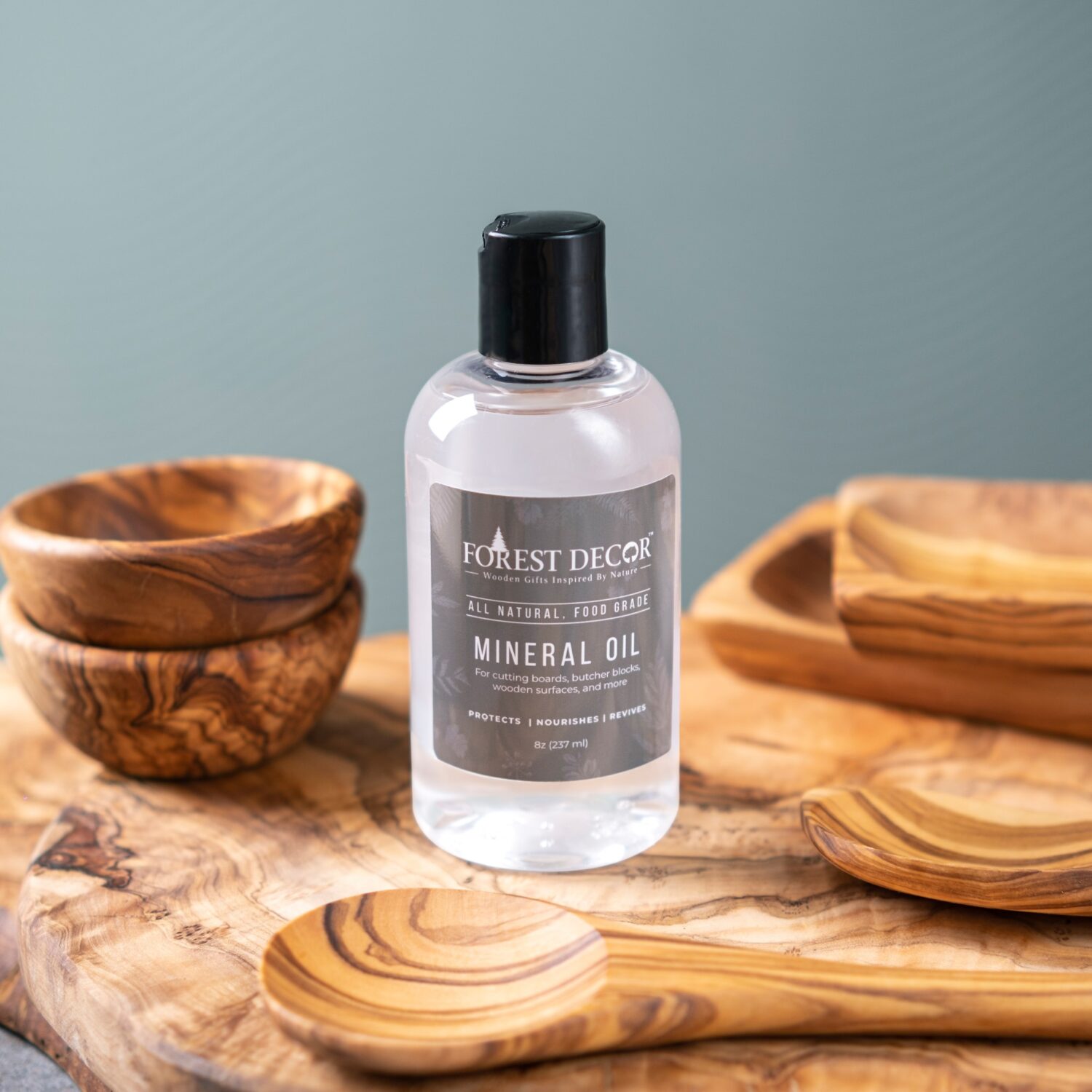
Forest Decor 8oz Food Safe Mineral Oil
$12.95