


WHY OLIVE UTENSILS
The spoon that outlives the pan
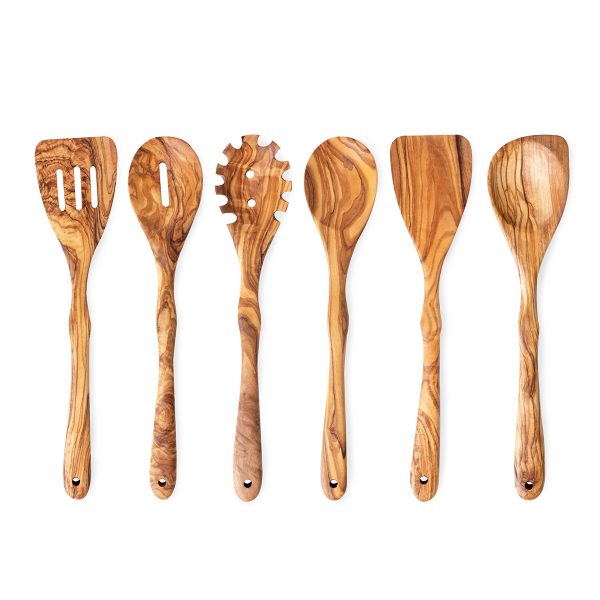
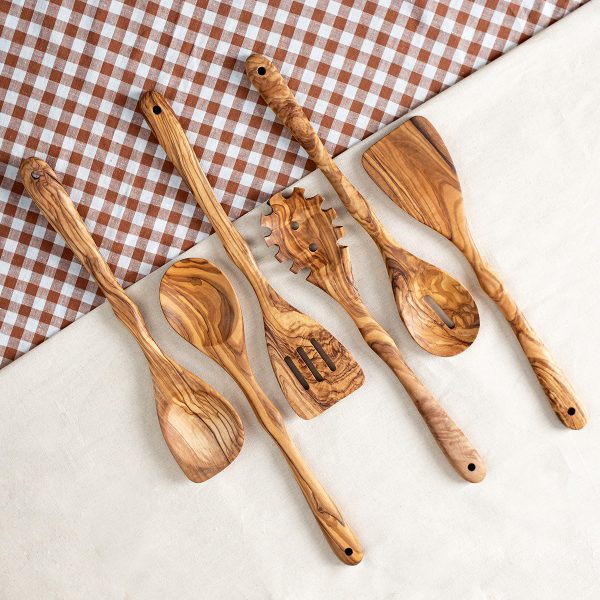
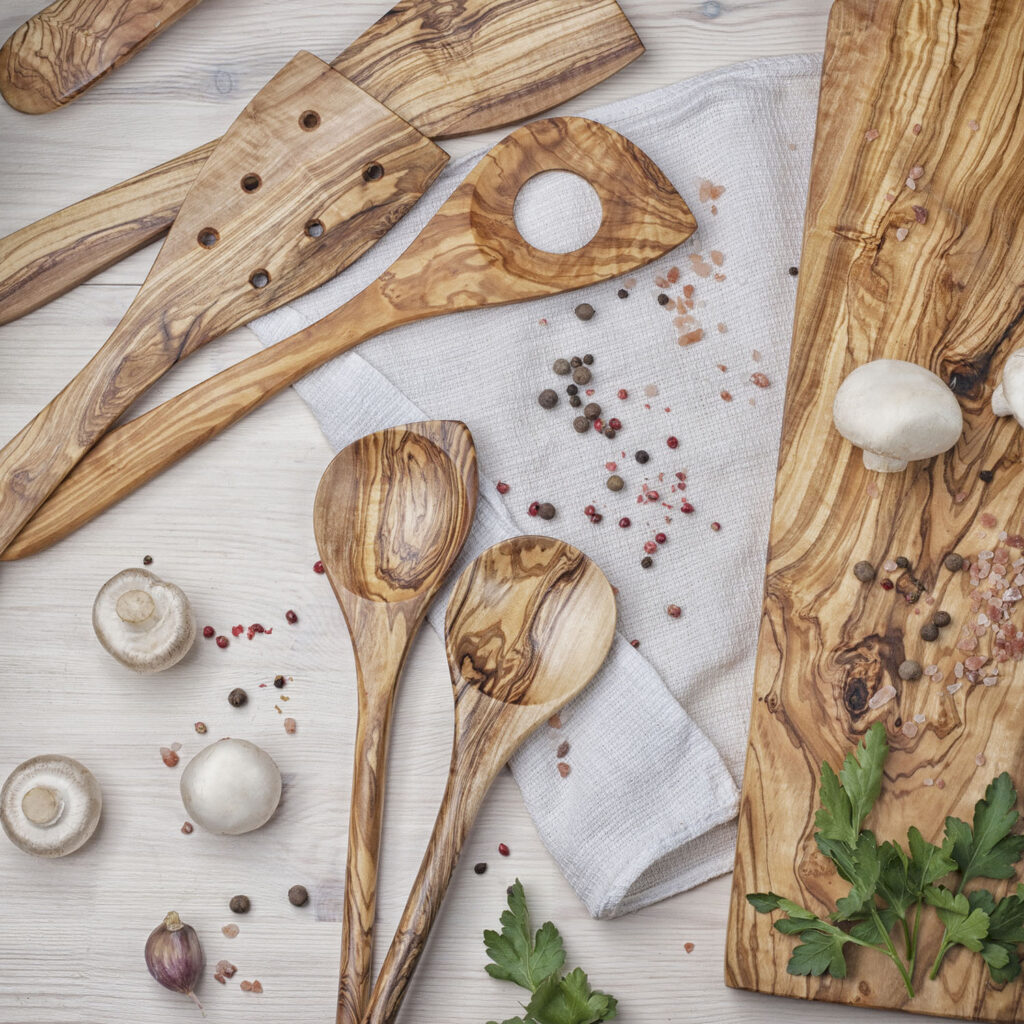
A wooden spoon is the most-handled tool in any kitchen, so the wood matters: olive is dense enough that edges stay crisp and surfaces stay smooth through years of stirring, and it won't scratch your nonstick or clang against enamel the way metal does. Every utensil here is carved from a single piece of solid olive wood — no glue, no joints — mostly from the branches our boards can't use, so the whole tree gets worked. And what you touch is just wood: sanded silky-smooth and finished with food-safe mineral oil, nothing else. No lacquer, no polish, no sealant — none of the shiny coatings most store-bought wooden utensils wear, which look great until they end up in your food. The range runs from single workhorses — round spoons, corner spoons, spatulas, ladles, salad servers — to 4- and 6-piece sets with a matching holder. Gifting one? Personalized utensils carry a name or phrase right on the handle.
QUESTIONS
Wooden utensils, answered
Are olive wood utensils safe for cooking?
Completely — and here's exactly what you're holding: one solid piece of olive wood, carved, sanded smooth, and coated in food-safe mineral oil. That's the entire ingredient list. No glue, no joints, no lacquer, polish, or sealant — the glossy coatings on most store-bought wooden utensils feel wonderful and slowly flake into your cooking; ours can't, because there's nothing on them but oil. Olive's density and closed grain do the rest: moisture-resistant, odor-resistant, naturally antibacterial.
Will wooden utensils scratch my pans?
Neither, and that's the trick. Maple sits in the sweet spot on the hardness scale: firm enough that the surface doesn't score deeply, soft enough that your edge doesn't dull the way it does on glass, stone, or bamboo. Chefs keep maple under their knives for a reason — the board and the blade both last.
Will a maple board stain or smell?
The opposite — that's half the reason to own them. Wood is gentler than any metal tool on nonstick coatings, enameled cast iron, and ceramic, and olive's fine, smooth finish glides rather than gouges. Your pans will thank you before your food does.
Should I buy individual utensils or a set?
Individuals for filling gaps — the ladle you're missing, a second spatula. Sets for the upgrade moment: the 4- and 6-piece sets cover the full stirring-flipping-serving range, arrive with a matching holder, and make the whole stove corner look intentional. Sets are also the classic housewarming move — one box, an entire drawer solved.
How long do wooden utensils last — and how do I care for them?
Decades, with the easiest routine in the kitchen: hand wash, dry promptly, and oil with food-grade mineral oil when the wood looks pale. Picked up a stain from turmeric or tomato? A paste of baking soda and water, rubbed in and rinsed, lifts most of it — then re-oil and it's good as new. Olive's density means these don't fuzz, split, or go soft the way cheap wooden spoons do. Skip the dishwasher and they'll outlast the appliances.
Can utensils be engraved with a name or logo?
Yes — handles take names, dates, short phrases, and logos beautifully. The whole engraved lineup, from single spoons to full sets and cook-off prize spoons, lives at personalized utensils; for team or client runs with your logo, our corporate program handles quantity.
Want a name on it?
A name on the handle, the family title on the ladle, a logo across a whole set — the same utensils, engraved to order with a free preview.