


When you’re shopping for a quality cutting board, olive wood keeps coming up and for good reason. But is it actually better than maple or walnut? And when should you choose live edge over a standard finish?
Here’s what you need to know before you buy.
What Is Olive Wood?
Olive wood is the hardwood of the olive tree (Olea europaea), the same tree that produces olives and olive oil. Because the trees are grown for their fruit, they are rarely cut down for lumber. The wood comes from old trees that no longer bear fruit and from pruned or storm-damaged branches.
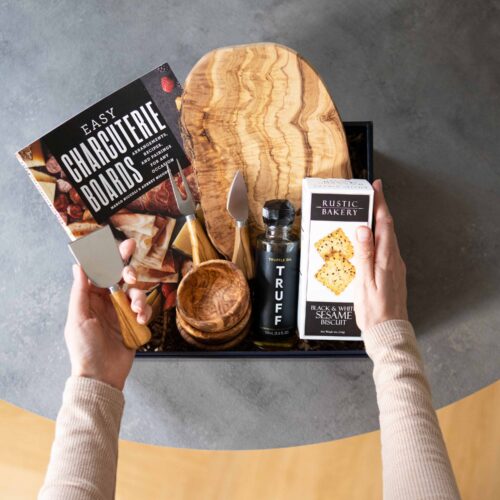
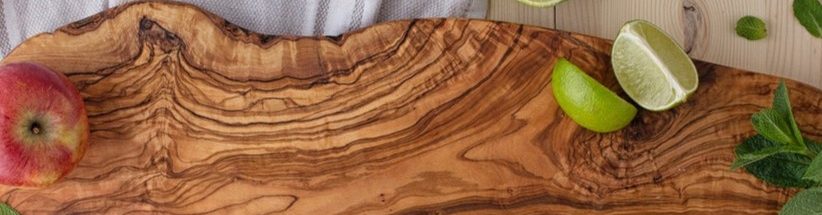
Ours comes from Tunisia and Italy, from century-old trees past their fruiting years. Olive trees grow slowly and unevenly over that time, which is where the grain comes from: golden wood crossed by dark, swirling streaks, with no two boards alike. It is also why we grade every board by hand. Only about four in ten of our olive wood boards qualify as Grade A, and those are the only ones we sell on our website.
Benefits of an Olive Wood Cutting Board
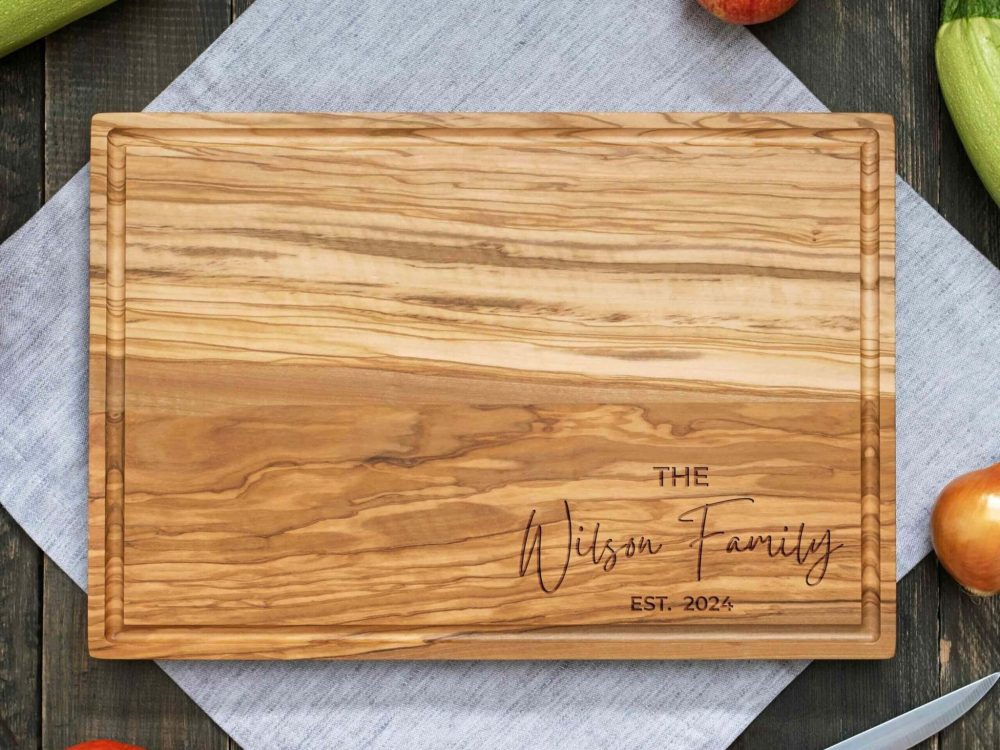
It is one of the hardest woods you can cut on. Olive wood measures about 2,710 lbf on the Janka hardness scale, nearly twice as hard as maple. That means fewer dents and shallower knife marks, so the board looks good for longer.
| Wood | Janka Hardness | Grain Pattern | Color | Best For | Maintenance | Trade-Off |
|---|---|---|---|---|---|---|
| Olive | ~910 | Highly varied, unique | Medium brown, golden | Entertaining, serving | Requires regular oiling | Paying for aesthetics & uniqueness |
| Maple | ~1450 | Tight, consistent | Light, minimal shift | Daily use, corporate, crisp engraving | Easiest to care for | Durability & professional looks win |
| Walnut | ~1010 | Defined, dramatic | Dark brown to black | High-end entertaining, warm aesthetics | Similar to olive, needs oiling | Beautiful middle ground |
The Key Insight: You’re not choosing between “good” and “bad”, you’re choosing what matters most to you.
The grain is tight and fine. Olive wood has a fine, even texture with a natural sheen. A smooth, dense surface takes on less liquid than coarser woods, which helps it resist stains and odors when it is cared for properly.
Every board is one of a kind. The streaks follow decades of uneven growth, so no two pieces match. That makes olive wood a natural choice for a gift or a serving board that sits out on the table.
It gets better with age. Olive wood deepens to a warmer honey color over time, and each coat of oil brings the contrast back.
One trade-off to know. Olive wood moves more than most woods when it takes on or loses moisture. Never soak it or put it in the dishwasher, and oil it when it looks pale. Our cutting board care guide covers the routine.
Want to know more about the material itself? Read our guide to what olive wood is and how it ages.
When to Choose Olive: The Honest Limits
Olive wood is stunning, but it’s not the “best” for everyone. Here’s when it might not be your pick:
You use your board daily for heavy chopping? Go with maple. It’s harder and holds up to daily knife work better.
You want something that won’t need maintenance? Go with maple. Olive and walnut both need regular oiling to prevent drying and water spots.
You have a busy kitchen with humidity and temperature swings? Walnut or maple are more stable. Olive’s varied grain can mean slight warping with extreme humidity changes.
Your kitchen is modern/minimalist? Maple keeps that clean aesthetic. Olive’s bold grain might feel rustic by comparison.
When Olive Wood Really Shines
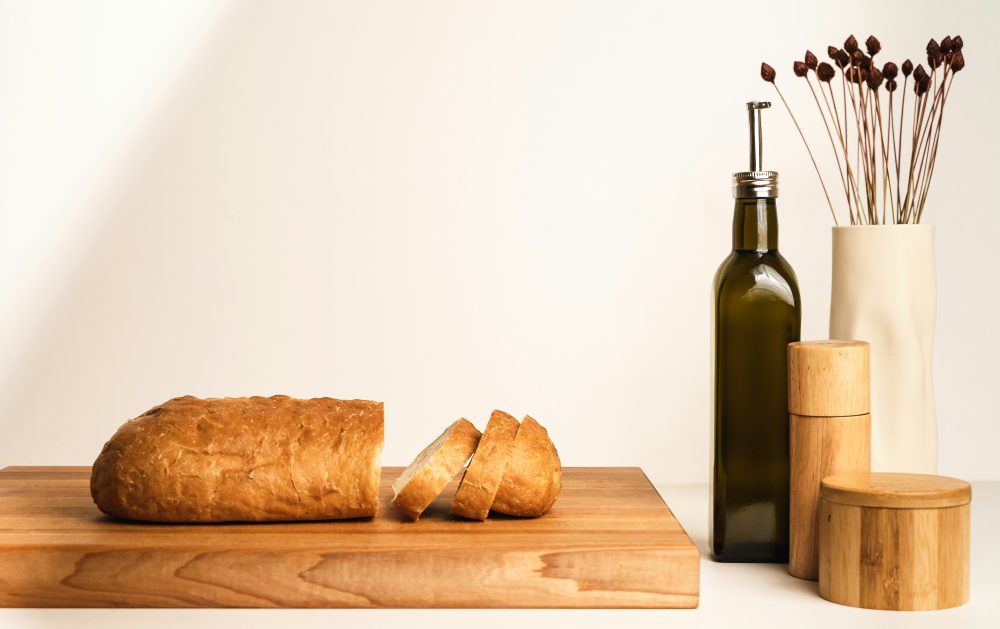
You’re entertaining regularly. The grain pattern is a conversation starter. Olive’s golden tones look expensive on a table, and the one-of-a-kind grain means your board is actually unique, not one of thousands.
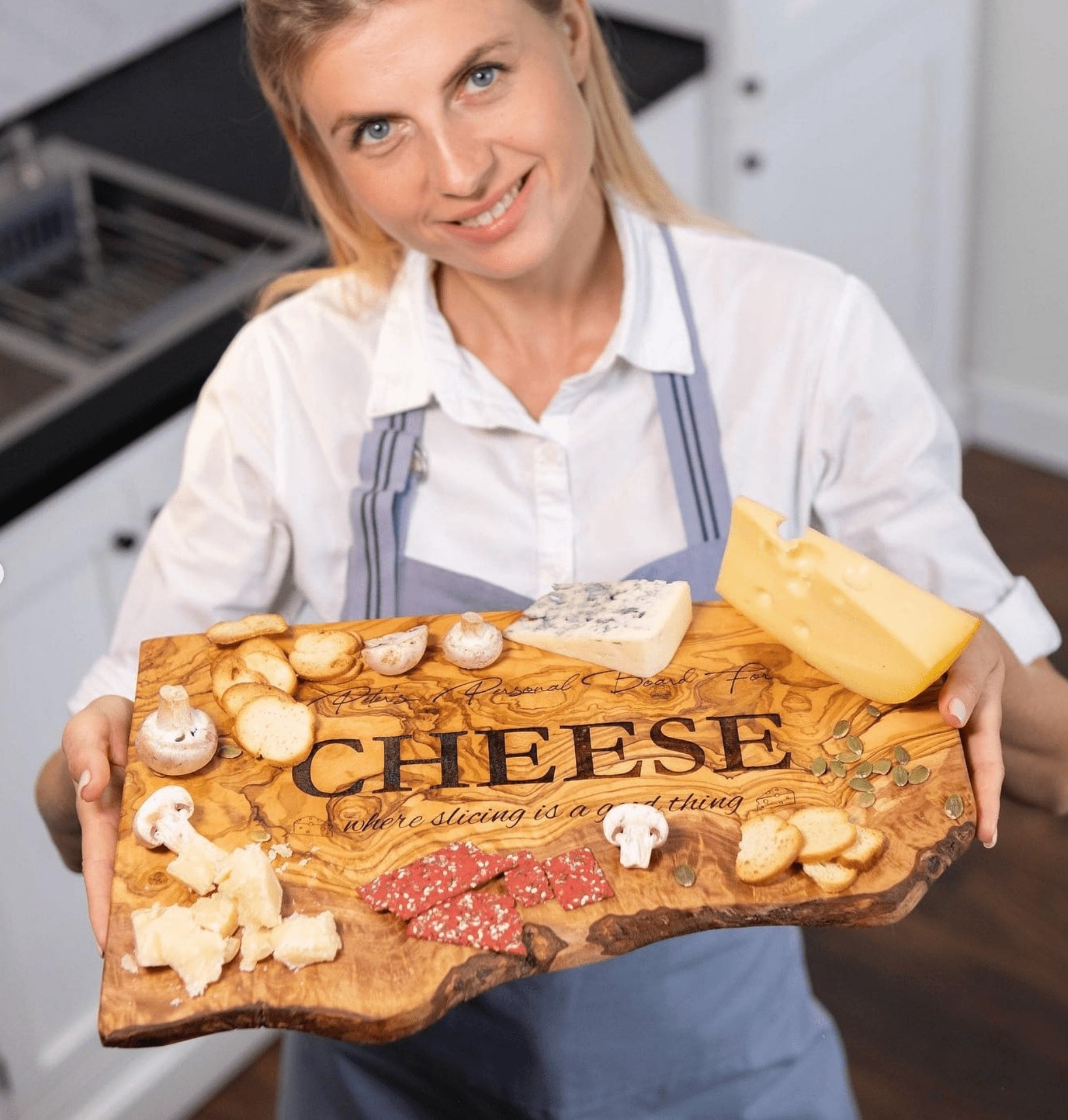
You want a personalized gift that feels special. Olive’s natural variation means that when you engrave a name or date, the background grain behind it is never exactly the same as someone else’s. That personalization hits different.
You appreciate wood science. Olive’s history (60-80 year old trees) and sustainable harvesting make it a story you can tell. It’s not just a cutting board; it’s a piece of something older and intentional.
You’re building a high-end entertaining aesthetic. Olive pairs beautifully with natural linens, ceramics, and candlelight. If your entertaining style leans toward warmth and texture, olive is the wood.